
Sign-up and deposit guide
How to sign up and deposit on Duel
I’ve done this myself, so this is the route I actually used rather than a generic crypto deposit guide. I’ll show you how to create the account, get crypto into your own wallet first, and then send the right coin on the right network to Duel without making the address mistakes that lose people money.
Create your Duel accountWhat I have actually sent
My saved record now covers eleven deposits: three in ETH during the first session, then eight in LTC across the second session and the £30 return visit. I started with about $80 in ETH. It was enough to try the slots, spend far too long on Mines and find out what happened when I wanted some money back.
The first £50 for the second session included a £3 cost on the Revolut X route. That matters when thinking about a small deposit: the amount leaving my bank and the amount available to play were not the same. It was a cost of getting the money into crypto, not a fee Duel charged to pay me out.
I keep the deposits in the running account book so the later top-ups stay visible. My experience with three ETH deposits was that each reached the balance within about a minute after the network confirmed it. I have not separately timed every LTC deposit, so I don’t apply that timing to all eleven.
I’ve also played on my phone. Duel ran smoothly and was easy to operate, but that is a playing impression, not a separate mobile deposit or withdrawal test. The payment record stays with what the saved transactions show.
1. Create your account
Duel’s Register form only needs two things from you: a username and a password. Tick the box to accept the terms, which say you must be over 18, then press Create Account. Adding an email is optional, and you can skip the form altogether by signing in with Google or Steam.
Nobody asked me for ID when I signed up, and it didn’t come up when I deposited or withdrew either.
Sign up on Duel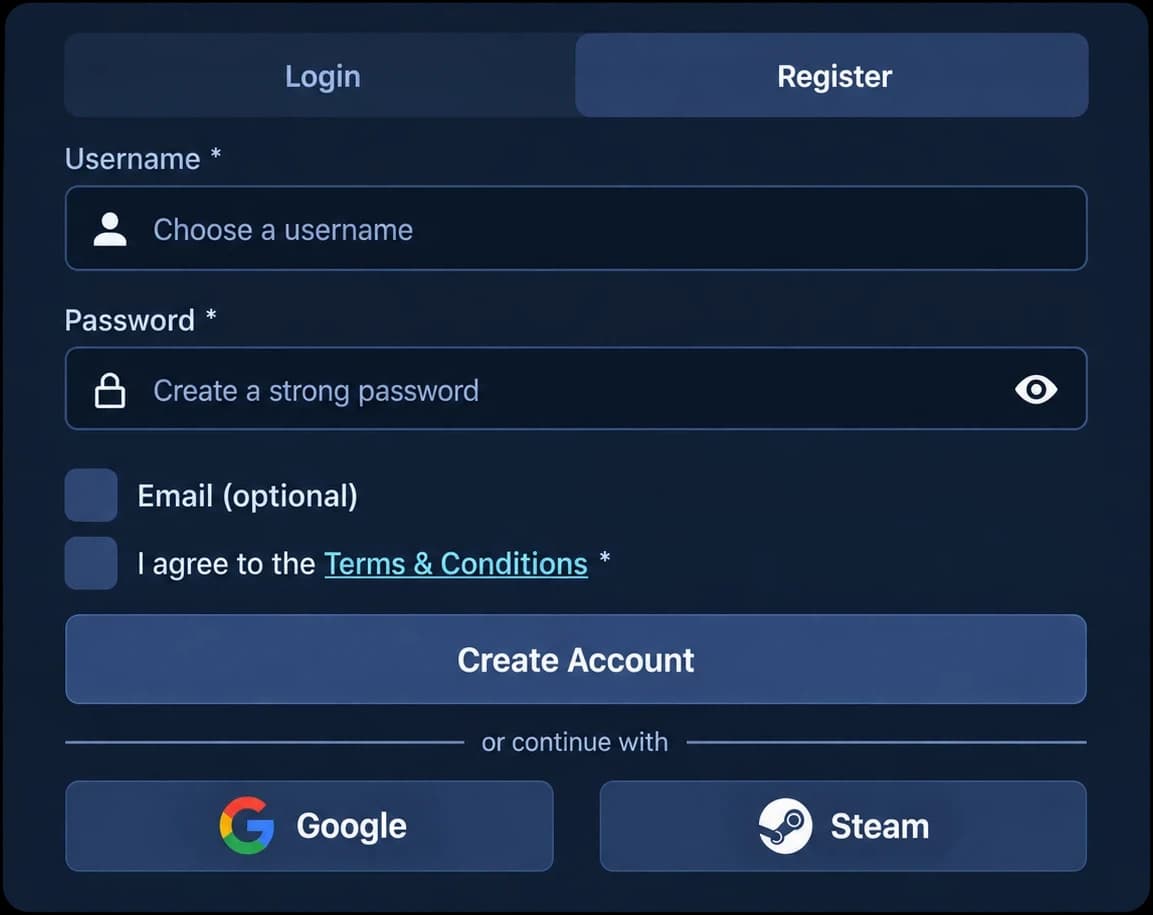
2. Get some crypto
Duel is funded with crypto, so you need some before you can deposit. I bought ETH on an exchange and moved it into my own wallet before sending anything to Duel.
The wallet in the middle matters, because exchanges watch where money goes. I lost a Coinbase account after sending funds to it straight from a crypto casino, so now I keep the exchange and the casino apart.
1. Buy on an exchange
 Coinbase
Buy a coin Duel accepts, such as USDT, BTC or ETH.
2. Move it to your wallet
 Cake Wallet
My pick: open source, non-custodial, and on iOS and Android.
3. Send it to Duel

From your wallet to the deposit address in Duel’s Cashier.
3. Make a deposit
With the crypto in your wallet, open the Cashier on Duel and go to the Deposit tab. Choose the coin you’re sending, then the network if Duel offers more than one, and copy the deposit address it gives you into your wallet’s send screen.
Before you send anything, check the coin, network and wallet address one more time.
Crypto transfers generally can’t be reversed, so sending the wrong asset, using the wrong network or pasting the wrong address can mean losing the funds. I always compare the first and last few characters of the address after pasting it, before I confirm the transfer.
After you send it, the deposit appears once the network confirms the transfer. Each of my three ETH deposits reached my balance within about a minute of that.
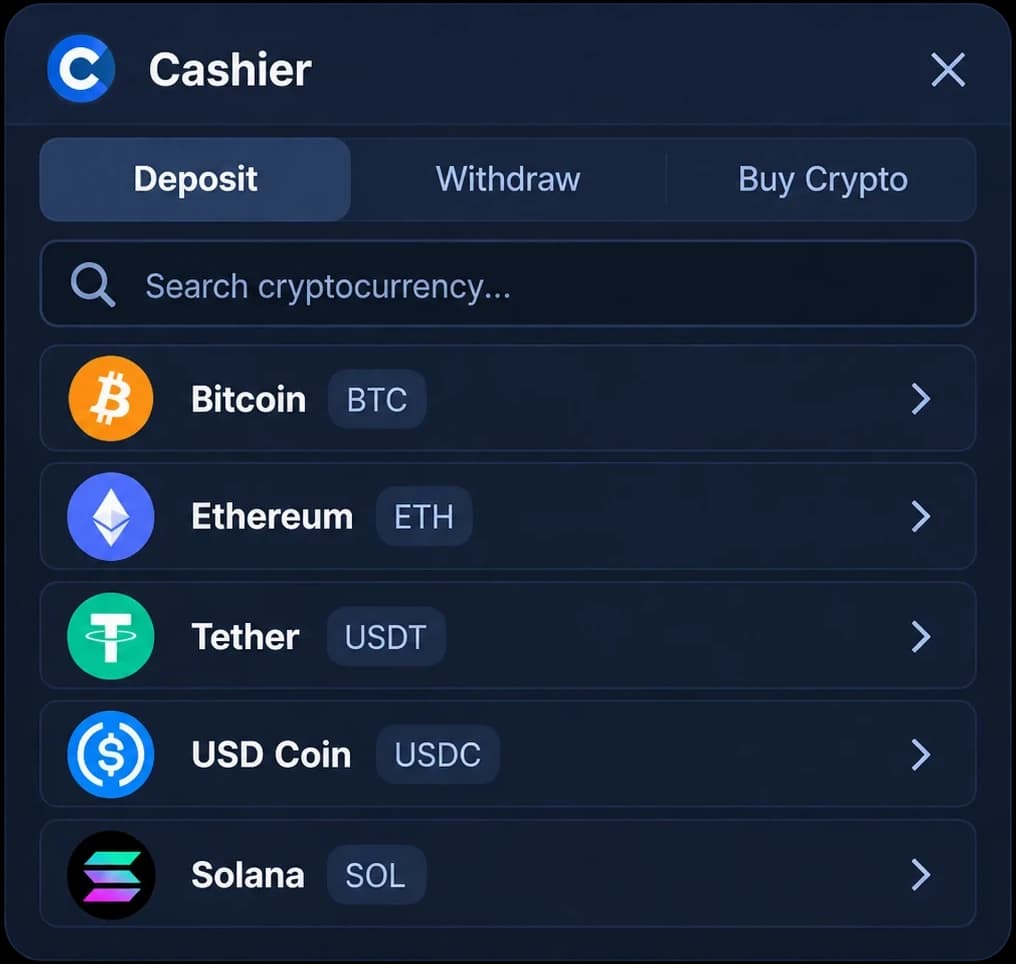
Duel supports the major coins
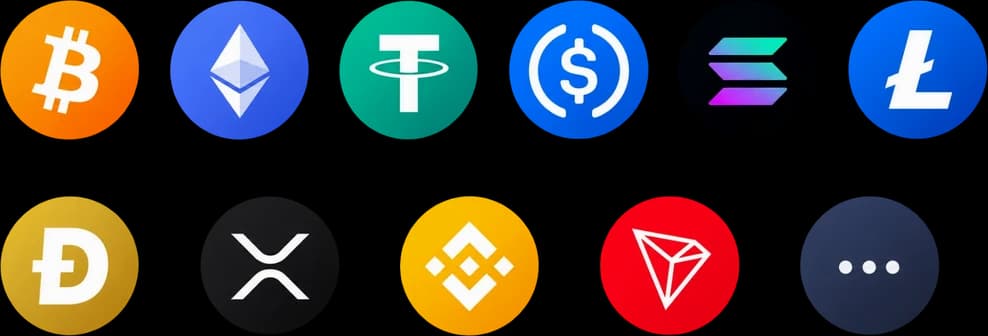
BTC, ETH, USDT, USDC, SOL, LTC, DOGE, XRP, BNB and TRX, among others. The list and networks can change, so go by what the Cashier shows you.
4. A few important tips
Send a small test first
On your first deposit, send a small amount and wait for it to reach your Duel balance before you send the rest.

Keep some coin for the fee
Network fees are paid in the network’s own coin, so sending USDT on Ethereum also needs a little ETH in the same wallet.

Save your recovery phrase
Write it down before you move money into the wallet. Whoever has the phrase controls the wallet, so keep it offline and to yourself.
What happened after the first deposit
Getting money in was only the first part of my test. The first session shows what I played and how I ended up cashing out twice. I keep the withdrawal receipts and the later account record alongside it, including the money I put back in.
Read my first experience